Table of Contents
Are you striving to achieve the best possible results while staying true to your ethical values? Then Marketing Ethics is what you need to learn more about! Aleph Website reveals Key Marketing Ethics, and the ‘Don’t Do’s’ of marketing Ethics.
As the importance of digital marketing continues to grow, it raises ethical concerns that cannot be ignored. When a new phenomenon gains momentum, it is common for ethical issues to come to the forefront. This is particularly true in the case of digital marketing, where marketing ethics, and ethical considerations in general, are of utmost importance.

What is Marketing Ethics?
The presence of ethics in digital marketing is a crucial consideration, and it’s important to understand how we can apply it within certain rules. Ethical issues in marketing can be defined in various ways, but they all agree on a few key values.
These values include not violating anyone’s privacy and autonomy, avoiding the manipulation of information and primary human emotions and dignity, and respecting the right to objective knowledge. Adhering to these values ensures that our digital marketing efforts are fair, honest, and respectful to all parties involved.
The U.S. Federal Trade Commission defines marketing ethics as truthful, non-deceptive, evidence-backed, and fair marketing practices.
Now that we have a clear understanding of what ethical values and standards in digital marketing entail, we can explore how they can influence your marketing campaign.

How can you align with these values and achieve maximum benefits and results within them?
Here are 5 ethical values to preserve personal and business integrity, build trust, and reap long-term benefits:. We are also disclosing a bonus 4 Don’t Do’s of Marketing Ethics
| Do’s of Marketing Ethics | Don’ts of Marketing Ethics |
| User Privacy | Don’t Buy 3F (followers, friends, fans) |
| Cultural Sensitivity | Inappropriate discounts |
| Consumer Autonomy | Ambush marketing |
| Pricing Integrity | Misusing influencers |
| Responsible Representation |
Now, let’s discuss the benefits (pros) of marketing ethics and how it can be seen as part of your business strategy and a selling point for your customers:
1. User privacy
Protecting the privacy and data of users is of utmost importance, particularly when these data are utilized for marketing objectives. By safeguarding user information, we demonstrate our commitment to ethical business practices and build trust with our customers.
2. Cultural Sensitivity
Marketing professionals should be cautious when creating campaigns that could offend or be misunderstood, especially when targeting sensitive groups. For instance, the Balenciaga campaign featuring children in latex is an example of a campaign that could be perceived as inappropriate and unethical.

3. Consumer Autonomy
It is important to ensure that marketing campaigns and strategies do not manipulate or coerce users into making purchases they would not have made otherwise.
To adhere to this principle, it is recommended to emphasize the value of transparency. When you are transparent about the processes, mistakes, strengths, and weaknesses of your services and products, people tend to trust you more.
4. Pricing Integrity
It is crucial to have fair and transparent prices to establish long-term trust and enhance the effectiveness of your business.
Avoid pricing per inquiry and hidden fees that can erode the trust and patience of users.
This approach will enable you to present your business in the desired light while staying within the market framework of your service.
5. Responsible Representation
It is important to present your product or service accurately and responsibly, avoiding any exaggeration misleading representations, or falsehoods.
Remember, honesty is always the best policy when it comes to promoting your brand.
Examples of how some companies leveraged Ethical Marketing in their advertising and campaigns:
Ethical marketing involves more than just generating profits. It is also about making a positive impact on the world, establishing a trustworthy relationship with consumers, and developing enduring connections based on mutual values.
This approach benefits both the company and the consumers, resulting in a win-win situation.
| No. | Company | Type of Campaign | Description |
| 1. | Allbirds | Sustainability | Allbirds is a shoe company that emphasizes sustainability and environmental responsibility in its marketing. |
| 2. | Patagonia | Environmental Awareness | Patagonia’s “Don’t Buy This Jacket” campaign encouraged consumers to think about the environmental impact of their purchases. |
| 3. | TOMS Shoes | Social Awareness | TOMS Shoes’ “One Day Without Shoes” campaign raises awareness about children’s health and education. |
The Don’t Do’s of Marketing Ethics:
Utilitarianism is a concept that is closely related to the human species. In the past, the motto of many was “profit at any cost,” but since 2020, this mindset has changed. Not only have the expectations of users significantly intensified, but the awareness of marketing professionals has also shifted. Nowadays, every advertiser is expected to exhibit a certain degree of ethical behavior so ethical decision-making begins in the marketing department.
We need to clearly understand abusive and unethical behaviors. Let’s list some examples to orient ourselves and ensure responsible actions while respecting the code of ethics:
1. Don’t Buy 3F (followers, friends, fans)
Buying followers for your services is a dirty move that often gets exposed, damaging your integrity and trustworthiness.
2. Inappropriate discounts
It may seem absurd, but discounts on certain services can be inappropriate and even offensive. Some discounts are a serious issue that cannot be ignored.
For instance, a private healthcare institution offering a discount on abortion or a funeral home giving a discount on a funeral.

These examples are not only inappropriate, but they also violate all ethical guidelines.
It’s important to question the motives behind such discounts and to be aware of the potential harm they can cause.
We should always reflect on our moral principles and the kind of world we want to create. Therefore, it’s important to be aware of our life philosophy.
3. Ambush marketing
Ambush marketing is a controversial practice that is not clearly regulated by law. It involves using someone else’s paid campaigns or sponsorships to promote your brand creatively.
This type of marketing is also known as parasitic marketing. For instance, Nike may distribute hats around the city on the day of a sports event that is officially sponsored by Reebok.
By doing so, Nike can successfully advertise for free as everyone at the event will be wearing Nike hats. Despite being an ethical dilemma, many large companies still use this type of marketing for their campaigns. It is difficult to put an end to it as it is often creative, entertaining, and well-organized to stay within legal frameworks.
4. Misusing influencers
Influencer marketing has become a popular way for businesses to promote their products or services.
However, it is important to use this influencer strategy ethically and transparently.
Misusing influencers by having them promote products without genuine recommendations or transparency can harm both the influencer’s reputation and the business’s credibility.
Let’s ensure that we use influencers responsibly and effectively.
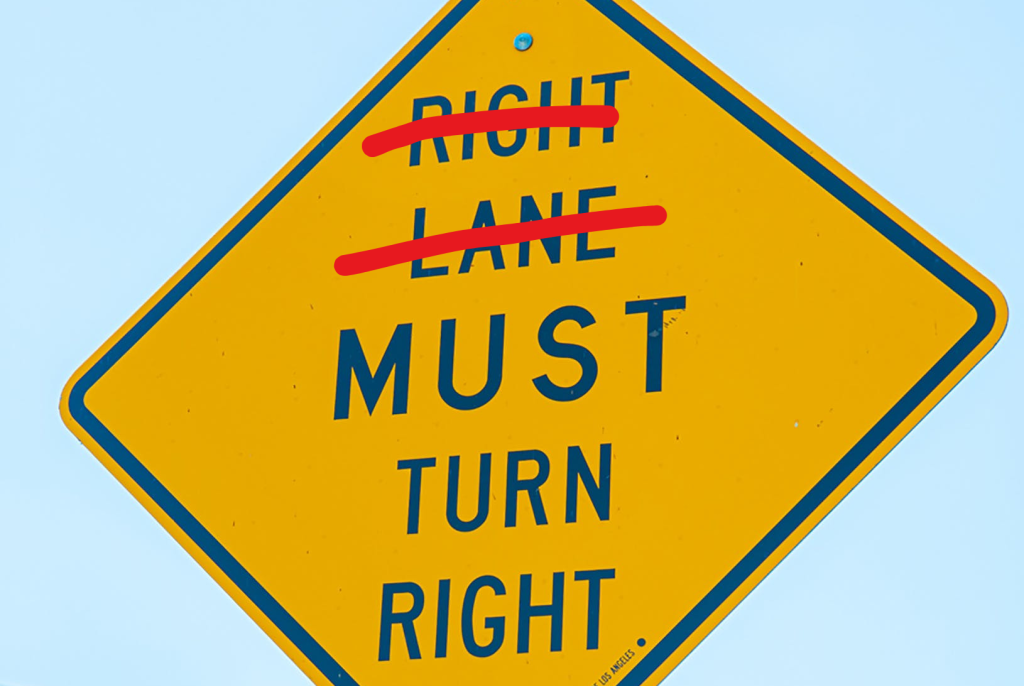
Being ethical in digital marketing, as well as in life, is a challenging task.
It requires individuals to navigate the fine line between right and wrong, and make ethical decisions that prioritize fairness and morality.
Ethical decision-making is at the core of business ethics, and it demands individuals to grapple with ethical dilemmas and apply ethical principles to find resolutions.
Ultimately, ethical behavior in business is an ongoing commitment to navigating ethical problems and dilemmas, fostering a culture that prioritizes ethical decision-making, and upholding the highest standards of integrity.
Therefore, it is crucial to prioritize ethical behavior in all aspects of life.