Table of Contents
In the dynamic world of digital marketing, crafting high-quality, original, and SEO-optimized blog content is paramount for success. This article will guide you through the art of content optimization using SEOLyze and Text Optimizer, helping you create articles that not only inform and engage your readers but also rank well on Google.
We are all familiar with standard content optimization techniques, which include implementing the proper keywords, skillful internal linking tactics, and thorough title and meta-tag optimization. Interestingly, though, one aspect of text optimization that is often overlooked is an analysis of the content itself. In particular, this involves an in-depth analysis similar to the ones carried out by Google’s web crawling bot to determine which niche you are in. This is known as WDF IDF analysis.

What is WDF IDF analysis?
WDF-IDF, short for Within-Document Frequency-Inverse Document Frequency, is a text analysis method employed in information retrieval and natural language processing. It assesses word significance in a document within a larger collection.
This analysis incorporates a highly intricate formula, but fortunately, we possess a tool capable of executing it swiftly – SEOlyze. The collaborative power of SEOlyze alongside another indispensable tool, Text Optimizer, empowers you to create articles that guarantee your high-ranking position. This is how seolyze and text optimizer can help improve your rankings.
1. Analyze WDF IDF with SEOlyze
This tool’s functionality includes looking at the top 10 websites that are rated for the keyword you select. It provides a graphical representation of the average word usage across these leading 10 articles.
You will need a keyword that you wish to rank for and a URL that goes to the page where your text is located to perform this type of research. Additionally, you can also add your text without publishing it on the internet. Then you just click “Start Analysis” and wait a few seconds.
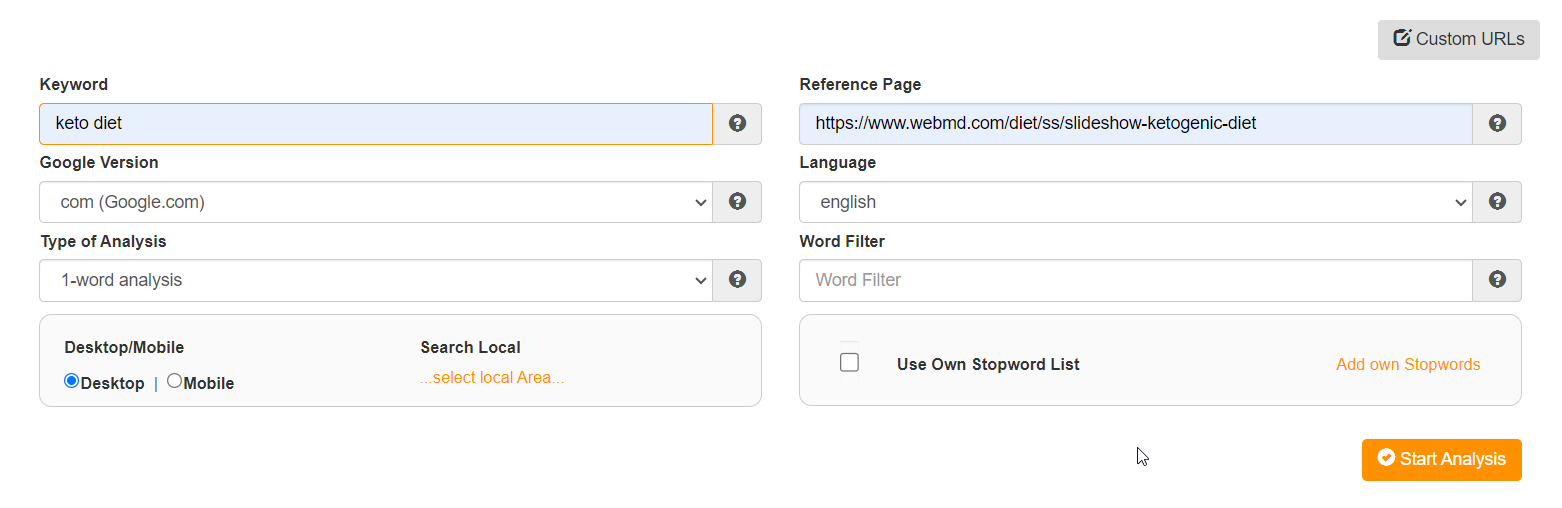
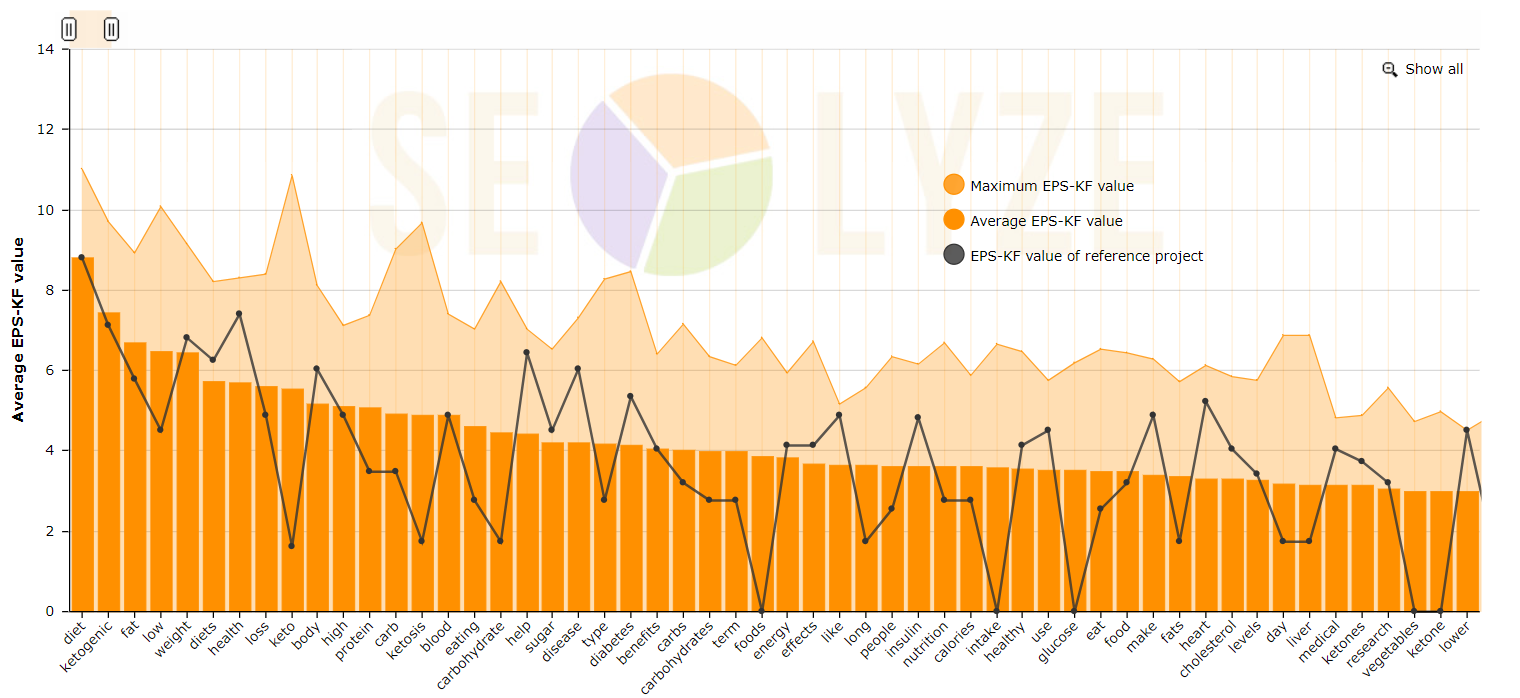
When the loading is complete, you will see a graph. This graph is easy to understand. What you see is keyword frequency, its maximum, and average value. The frequency of words in your content is represented by the black line.
2. Make a list of missing keywords within your target topic
When interpreting this graph, the golden rule is that the black line should be as close to the average as possible. That implies your content will use the same terms as the pages that are well-ranked for the keyword that you are pursuing. Optimizing your text this way sends a signal to Google which indicates that your content represents a relevant entity and that it effectively corresponds to the semantic relationship or topic you are addressing. This topical SEO alignment can improve your chances of ranking higher in search results.
3. Use Text Optimizer to find keyword variations for missing keywords
When you have identified all of the terms lacking in your text that are critical to your topic (in this example, those words include glucose, vegetables, ketone, and so on), you can optimize the content via text optimizer. You are going to do this by clicking the “Start Optimizing” button in the upper right corner. When you enter your keyword and a link to your content, you should get a list of terms that looks like this:
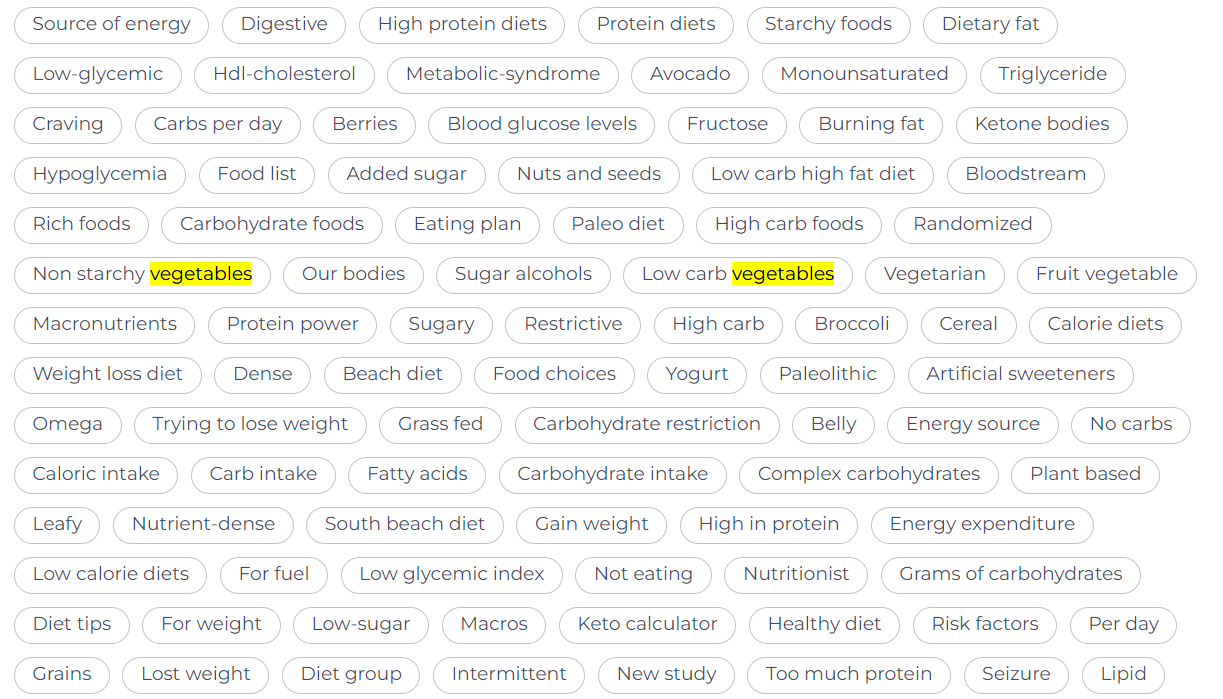
Here, we see a collection of keywords the tool identifies, which can be seamlessly integrated into your text. These keywords are essential in signaling to Google that your content is a relevant entity within the topic you are aiming to address.
4. Use Text Optimizer to find what search engines expect before and after the missing keyword variations
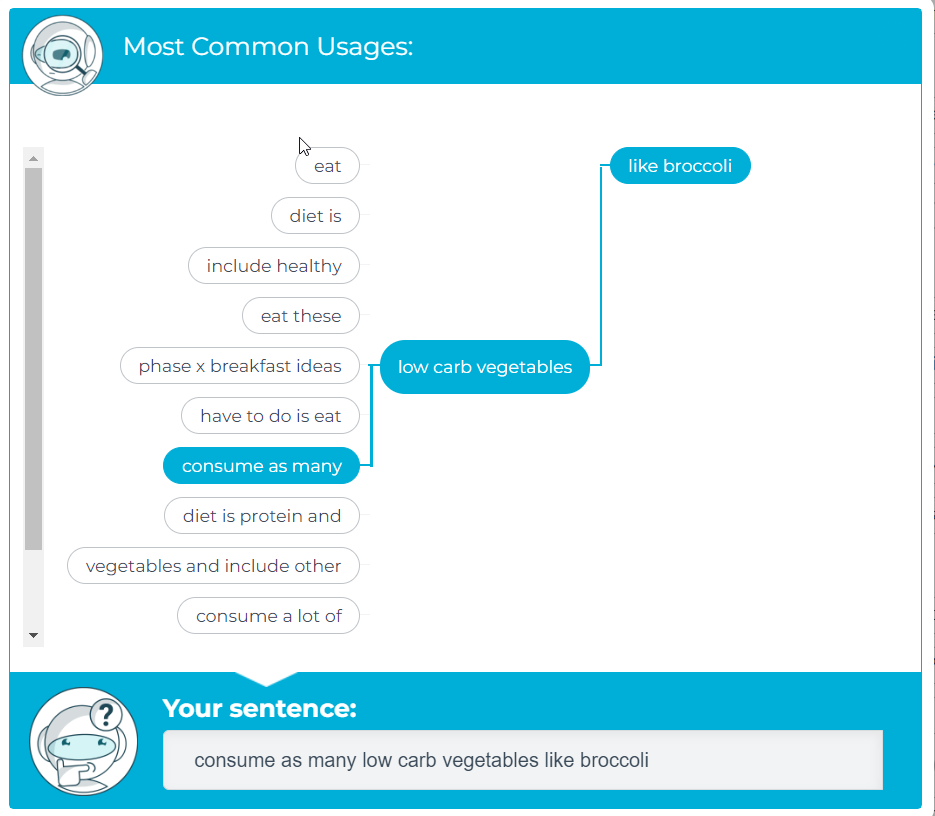
This tool works by showing you the most common usages of the term that you are lacking in your writing and assisting you in building a sentence that will improve the quality of your content.
5. Use the sentence generated by Text Optimizer that best fits the CONTEXT of your article
“Consume as many low-carb vegetables like broccoli”
This sentence contains the keyword ‘vegetables,’ filling a significant content gap. Furthermore, it has significance in this post since broccoli, a popular superfood, is a key component of the ketogenic diet. Not only does this sentence enhance your content by introducing a vital keyword, but it also seamlessly aligns with the central theme of this blog.
6. Create a paragraph with the missing keyword variation in a contextually meaningful sentence and paste it into your text
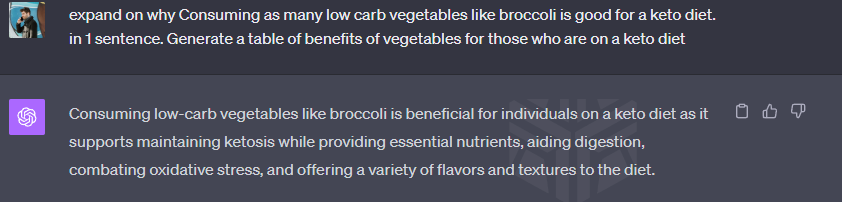
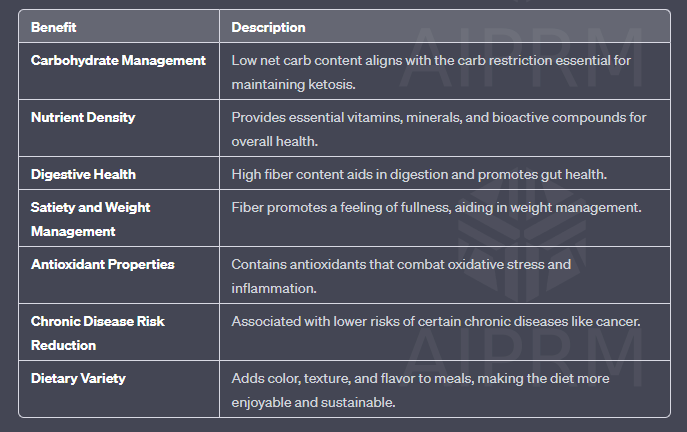
This way we have used Chat GPT to expand on an entity-optimized sentence containing a missing keyword variation that was important for the article to rank higher in search engines.
Not only have we optimized the article, but we also threw in a table of benefits of consuming vegetables in a keto diet. This now holistically offers a great user experience as we provide value while fully optimizing the article for better ranking.