Table of Contents
Follow these recommendations to improve your domain authority, security and overall performance. The benefits go beyond security and loading speed; affecting you organic traffic and user experience positively!

1. What is a Website Domain?
A domain is the name of a particular website that is easy to remember. That is what people type into a web browser.
For example, “www.google.com” is the name of the domain for Google. It’s short, memorable and directly takes users to their website. The same goes for your domain, it should be unique to you, and no two websites can have the same one.
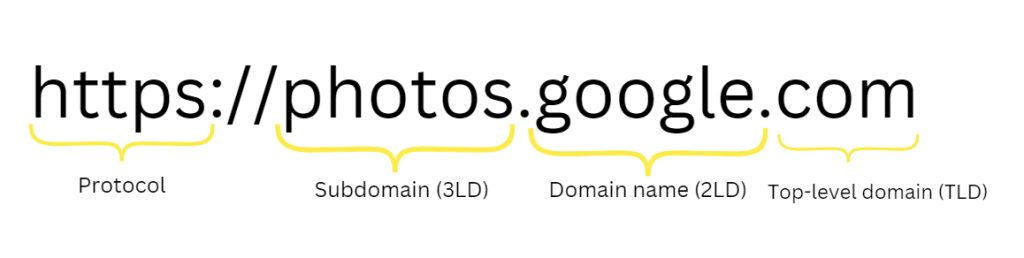
The domain photos.example.org is divided into three visible parts:
1. ‘.com’ – indicates a top-level domain (TLD).
2. ‘google’ – is the 2nd level domain (2LD) – domain name
3. ‘photos.’ – indicates the 3rd level domain (3LD) – subdomain
1.1. Domain Name System (DNS)
Websites are identified with IP addresses, but they aren’t easy for people to remember, so domains are necessary to make it easier to keep track of website names. Domain Name System or DNS steps here to enable this connection.
Whenever you try to open a particular domain, like domain name “google.com”, the DNS translates it into a number known as an IP address, which is the number that computers use to find websites. It is the DNS system that helps users connect to websites using domain names.
Without DNS, long numbers would have had to be memorized in order to visit a site. Thankfully, DNS saves us and makes the internet user-friendly!

2. Importance of Domains for SEO
There are numerous indicators that influence the ranking of websites by search engines and your domain is one of them. The proper domain can make your site more attractive to both search engines and users. A well-chosen domain can build trust, make your site memorable, and improve your chances of showing up in search results.
Even though Google states that the keywords in domain names do not concern ranking factors, research indicates that a domain name still has an effect on user behavior in some way or another. It can be observed that if a domain clearly states what the website is all about, the users tend to click on it more often. Such clicks, even though they are not a ranking SEO factor, do help in enhancing the user experience which may have an impact on the ranks.
2.1. How Domain Names Affect Search Rankings
Generally speaking, domain name itself isn’t considered to be a direct Google ranking factor, however, elements of your domain name may play into your overall SEO success. For example if the domain name is related to the content of your site, it makes it easier for search engines to categorize and rank you.
A short, relevant, easy to remember and type domain name helps both search engines and users know the content of your site easily. That’s why you should avoid domain names that include numbers or other non-standard characters.
It is also valuable to mention that having a keyword in your domain can still be beneficial and can give you an SEO advantage but stay away from stuffing too many keywords into your domain. These types of domain names once carried weight as a ranking factor but today it can look spammy and actually hurt your rankings.
2.2. Exact Match Domains (EMD)
EDM stands for Exact Match Domains. It is when search queries exactly match a domain. For example, if someone is searching for “SEMRush” and your domain is “semrush.com”, that’s an EMD.
The good thing about EMDs is that they are memorable. But on the other side you shouldn’t rely on the domain name alone for ranking. In September 2012, after Google’s EMD update just having an EMD will not guarantee top rankings. It all depends on the content of your website. It is important to focus on quality content.
For example “weather.com” is the top result when you search for “weather”:

Sites like this are high authority sites with good E-E-A-T score and are combined with high-quality content. Many exact match domains hardly rank on Google.
2.3. Domain History and Its Impact on SEO
Domain history is important, that’s why before buying a domain it’s smart to check its history. In case the domain has been used earlier, search engines will consider its history. That means, look for any red flags, spammy backlinks, or previous penalties because that could hold you back in Google.
A clean domain history may give you a boost in rankings, while a troubled history (for example if a domain was penalized in the past) entails extra work regarding trust with search engines such as Google because Google loves a site for its trust and credibility.
Over time, all domains rack up backlinks as more and more sites mention them.

As you can see, generally speaking a well-functioning website should be overall gaining more backlinks that it’s losing:

3. Website Authority Score
Authority score is one of SEMRush metrics that shows you the general quality of a webpage and how strong and trustworthy your website looks to search engines. While authority score doesn’t influence your rankings, it helps you to understand just how good or bad domains are in comparison with others.
In SEMRush after typing domain into ‘Domain Overview’ section, you can check the Authority Score:

The score can be found in many places in SEMRush:
- Domain Overview
- Backlink Analytics
- Backlink Audit
- Link Building Tool
3.1. How Authority Score is Calculated
When SEMrush checks your Authority Score, it looks at three key elements of your site:
1. link power (the quality of your backlinks)
2. natural profile (indicators of spam), and
3. organic search performance (how much traffic you’re getting from search engines).
SEMrush’s calculation gives you a clear picture of how strong your website is in the eyes of search engines.
In SEMRush section ‘Backlink Analytics’ you can check authority score by main factors:

More about the Authority Score labels you can read here.
3.2. Good vs Bad Authority Score
Authority Score in SEMRush ranges from 0 to 100.
In SEMrush, a good Authority Score lies within the range of 50 and 100. If your score is low (less than 30), that might be one more reason to improve your content, gain more high-quality backlinks, or further optimize the performance of your website.
Authority score is an arbitrary metric that doesn’t always reflect real domain power. Some sites may be DR 40 but are getting very low quality traffic, while others may be DR 15 but getting qualified leads through organic channels. That’s why this metric is used to determine the ‘internet footprint’ and a generic ‘site strength’ but not necessarily a true ‘authority’ metric.
A higher Authority Score, the better your site will rank in search results, resulting in more traffic and increased visibility of your online presence.
A low Authority Score simply means that search engines do not really trust your website that much, that’s why it can be difficult to rank well. However, improving the content on your site, its performance, and its backlink profile will pay off over time. It’s worth it!
A good Authority Score does mean creating a website that is trustworthy for users and search engines alike.
3.3 Why the Difference in Authority Score?
Authority scores will tend to vary greatly amongst two competitors of each other within the language services industry, for example, berlitz.com vs. bicortexlanguages.com.
This may vary owing to a number of key factors considered. Some of these critical factors are:
- Backlink Profile
Berlitz has a diverse backlink profile, including top links from websites, education, and high-authority domains-all of which would effortlessly boost their score for authority.
BiCortex, on the other hand, likely has fewer high-quality backlinks due to its smaller size and brand recognition, which impacts its score.

- Investment
Being the large international company that it is, Berlitz can commit a lot more resources to their SEO, content creation, and link-earning campaigns compared to BiCortex. This is the way they are in positions to outperform their competitors in acquiring quality backlinks, given the smaller companies like BiCortex may have tighter budgets that eventually limit their SEO efforts.
- Brand Strength
First, there’s the big brand name advantage: decades of reputation. Sometimes, in fact, unsolicited links are driven purely by brand recognition, where people refer to and link to a company’s content naturally. This may be because BiCortex doesn’t have such sturdy brand authority or visibility, hence getting fewer unsolicited, high-quality links.
- Advertisements
With a broader advertising reach, Berlitz runs large-scale campaigns that drive traffic and engagement, often resulting in additional backlinks from various channels, including media coverage and partnerships. BiCortex’s advertising is likely more targeted, which means fewer backlinks generated from these efforts.
- Company Size and Resources:
Obviously the size of the company plays a significant role.
Berlitz will have much more resources and therefore teams to really push more intensive and effective SEO strategies, such as collaborations with authoritative sites, quality content creation at scale, and partnerships.
BiCortex would have to strain to compete in volume or impact with less across all those areas.
That is to say, Berlitz has a higher authority score simply because of a better backlink profile due to its greater investments, strong branding, wider advertising efforts, and more placed resources that further entrench it online and give it greater authority over smaller sites like BiCortex.
3.4. The Importance of Backlinks and Their Impact on Domain Rating (DR)
Backlinks remain critical in improving a website’s DR and overall SEO performance.
Immediately some authoritative websites link to your domain, search engines will look at this as a vote for your site and increase its credibility. This higher DR gives your domain more strength, enabling your website to rank better in search results.
Better quality backlinks mean better rankings, and better rankings are worth something in referral traffic that will help your site’s visibility and authority online.
The more high-quality backlinks you accrue, the stronger your domain will be.
It’s worthwhile to learn about how small businesses can acquire backlinks.
4. Security Essentials for Domains
Security is a critical part of website operation since the average website has to deal with 94 cyber attacks each day. Also, if your site isn’t secure, users won’t trust it. Business owners now have to secure domain names using necessary security measures against cyber threats.
You can always check the health of your domain by using this tool developed by the National Cyber Security Centre has made this check tool available and free to use:
Domain name security is the practice of implementing those security measures, controls and technologies protecting your company’s domain name from cyber threats.

Now let’s dive into some domain security steps you can take.
4.1. SSL Certificates and Their Impact on Trust and Rankings
SSL stands for Secure Sockets Layer which always ensures that all data transferred between users and websites, or between two systems, remains impossible to read. Every website with an SSL certificate at the beginning of the URL has “https”(which stands for HyperText Transfer Protocol Secure) instead of “http”.
Regarding SEO, Google considers SSL as a ranking factor because websites with SSL are seen as more secure. In other words, an SSL certificate not only protects your users but can also boost your rankings and build trust in your site.
When you see a padlock icon that means the website you are on has SSL encryption.

4.2. Understanding TLS and Its Role in Secure Connections
There have been different versions of SSL protocol, all of which faced some sort of security issues. TLS (Transport Layer Security) is an updated version of SSL and ensures that sensitive information such as passwords or credit card details is kept safe during online transactions.
This can explain why services such as Cloudflare add even more protection and performance to websites. Cloudflare optimizes TLS implementation, hence helping protect data in transit and shielding websites from a variety of security threats including DDoS attacks. With Cloudflare, connections go faster and are more secure, especially in the handling of sensitive information about the user.
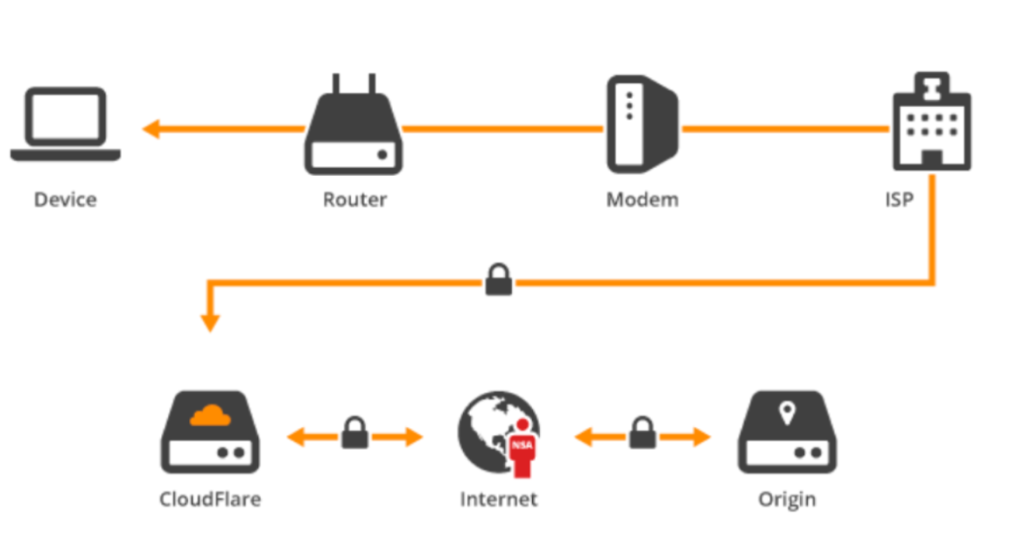
Source: Introducing Strict SSL
While everyone still refers to SSL, it’s actually TLS that does the heavy lifting in modern websites. The bottom line is, any website collecting personal information needs to have this protection in place.
4.3. Web Application Firewall: Protecting Against Cyber Threats
Web Application Firewall (WAF) is developed for the protection of web applications attacks by filtering and monitoring HTTP traffic between the Internet and the application.
How Does a WAF Work? A WAF blocks common application layer attacks, such as cross-site scripting (XSS), SQL injection, and cookie poisoning. It stops unauthorized data from leaving your application and keeps hackers from gaining access to your server.
That’s why WAF is important for online business. It protects sensitive information, such as customer details and financial data.
Even better, a secure site also helps with SEO since it means better UX. Search engines favor websites that prioritize security.
In short, it is very important to enable a web application firewall for your site because it will save your domain from harmful traffic and other kinds of cyber threats. Your investment in a WAF ensures building a secure and trusted online presence.
4.4. HSTS protocol
HTTP Strict Transport Security or simply HSTS is a component in web security policy that prevents the websites from downgrade attacks or cookie hijacks. It helps control the security of websites by controlling the way browsers access them.
This technology is designed to make sure that the browser works with web pages exclusively over HTTPS and eliminates the possibility of returning to the insecure state of the page (HTTP). When HSTS is on and a user requests an HTTP site, their browser will seamlessly redirect the user to the relevant HTTPS site.
This prevents all the sensitive information such as the login details from being sent without encryption. When put together with SSL/TLS certificates HSTS can greatly enhance the security level of the website.
5. Website Performance and Availability
How well your website performs can make a big difference for SEO. A fast, always-available site keeps visitors happy, and search engines like Google reward that by allowing them to achieve higher rankings.
Let’s explore some important points like CDN and loading speed.
5.1. Importance of CDN for Speed and SEO
A Content Delivery Network, or simply CDN, works pretty much in the way of a super-fast delivery system for your website’s content. Instead of relying on just one server to load your site, a CDN distributes your content across a number of servers around the world. This means that no matter where a visitor is, they will get your website’s content from the nearest server, which will thus enable a much quicker loading of the site.
Web pages that are filled with images, videos, and large media files take a lot of time to load. All this can be pretty frustrating for users. CDNs respond effectively to this challenge by the distribution of content in the easiest and fastest way to load.
However, using a CDN itself is not enough. It’s important to make sure that your CDN provider follows best practices for installation. When set up correctly, a CDN not only speeds up your page load time but also raises SEO performance because Google places a strong emphasis on site speed when determining rankings.
So, if you want to make your website fast for users and search engines, then investing in a CDN is an easy and effective means of gaining better page load times and higher rankings.
5.2. How Website Loading Speed Affects Rankings
Ever wondered why it seems that your website is stuck on the later pages of the Google search results, no matter how much effort you’ve put into optimizing your web pages? Sometimes, it is due to something as little as a slow performance of the website..
For news websites and mobile content, such as those featured on Google News and Google Discover, speed is even more crucial. These platforms prioritize fast-loading content to ensure a smooth user experience on mobile devices.
Page speed is a direct ranking factor for both desktop and mobile search results. In general, fast loading websites are more likely to rank higher on SERPs compared to slower ones. Actually, speed is so important that Google has made it an official ranking factor. The logic is simple: users like fast websites, and so do search engines.

Google provides a helpful tool for testing your website’s load time, which is called PageSpeed Insights. This tool gives SEOs and website owners an easy way to understand their site’s performance.
You will be taken through detailed results with suggestions for improvement after entering The URL of your website in this tool. You can access this tool at PageSpeed Insights.
When you run the test, Google gives you two options: one for mobile and one for desktop version.
Since Google is a mobile-first, it makes sense to test speed on mobile versions first.

Why is speed so important? When a website loads too slowly, visitors leave quickly, and this signals to search engines that probably your site is not providing a good user experience. Google has acknowledged that website loading speed will be highly crucial for rankings since it directly impacts user satisfaction.
Page speed refers to the time it takes to load the content of a web page correctly. Even small delays can affect how visitors engage with your site: slower load times can increase bounce rates and decrease engagement metrics, such as time spent on site or pages viewed per session.
Speeding up your page can positively impact both: user experience and SEO performance. Improve your site speed with compressed images, less code or direct guidance of Google’s PageSpeed Insights.
6. What Happens When a Domain Expires
Let’s first go over what happens when a domain expires and why it’s important to avoid it.
When your domain registration expires and if you don’t renew your domain right away, you no longer own that domain; it can be bought by someone else.
This means that the person who bought it potentially takes over your domain with all the traffic and brand recognition that comes with it. To avoid this, always set auto-renew for your domain or track renewal dates.
If you do not renew the domain by the expiration date, the name will enter the renewal grace period. During that period the registrant can still buy the domain back without paying additional fees.
Keep your domain active, so that your website remains online, retains its rankings, and keeps serving your visitors without any interruption.
7. Submit your domain and sitemap to Google Search Console
It is equally important that you submit your domain and sitemap to Google Search Console (GSC) to ensure that your website is in the view of search engines and indexed accordingly. GSC is a powerful tool whereby one is able to trace the performance of one’s website, observe potential issues, and even communicate directly with Google.
By submitting your domain, you’re basically telling Google to crawl your website for proper indexing and ranking. Here is an example of an uploaded sitemaps to GSC.
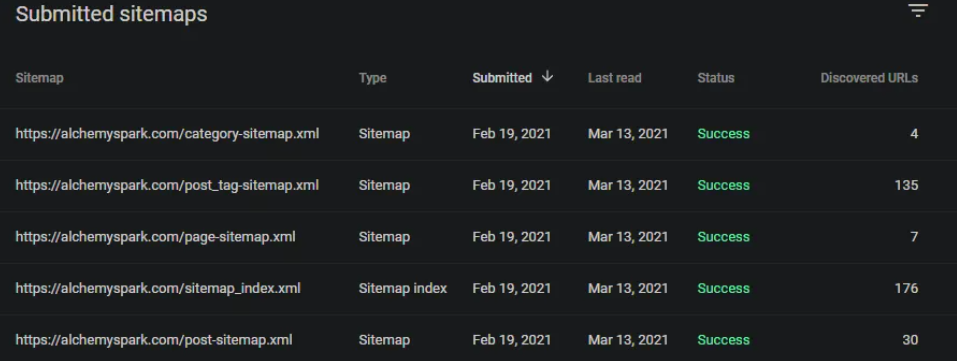
It becomes very important in cases of new websites or domains that have faced some serious changes. Not less important is the submission of your sitemap, as this provides Google with some kind of a roadmap into your site, helping the search engines understand the structure and content of your site.
By submitting your domain and sitemap, you help the search engines discover all the pages on your website-even the ones that could potentially be missed. This proactive move will go a long way in improving your SEO effort to ensure your content is efficiently crawled to stay competitive in search results.